


If you are taking — or considering — a GLP-1 medication like semaglutide (Ozempic, Wegovy) or tirzepatide (Mounjaro, Zepbound), you have probably heard the exciting news: these medications can help people lose significant weight. But there is an important part of the story that does not get enough attention — and it could make or break your long-term results.
Not all weight loss is the same. And if you are not careful, you could be losing the very thing your body needs most: muscle.
The Problem: You Are Not Just Losing Fat
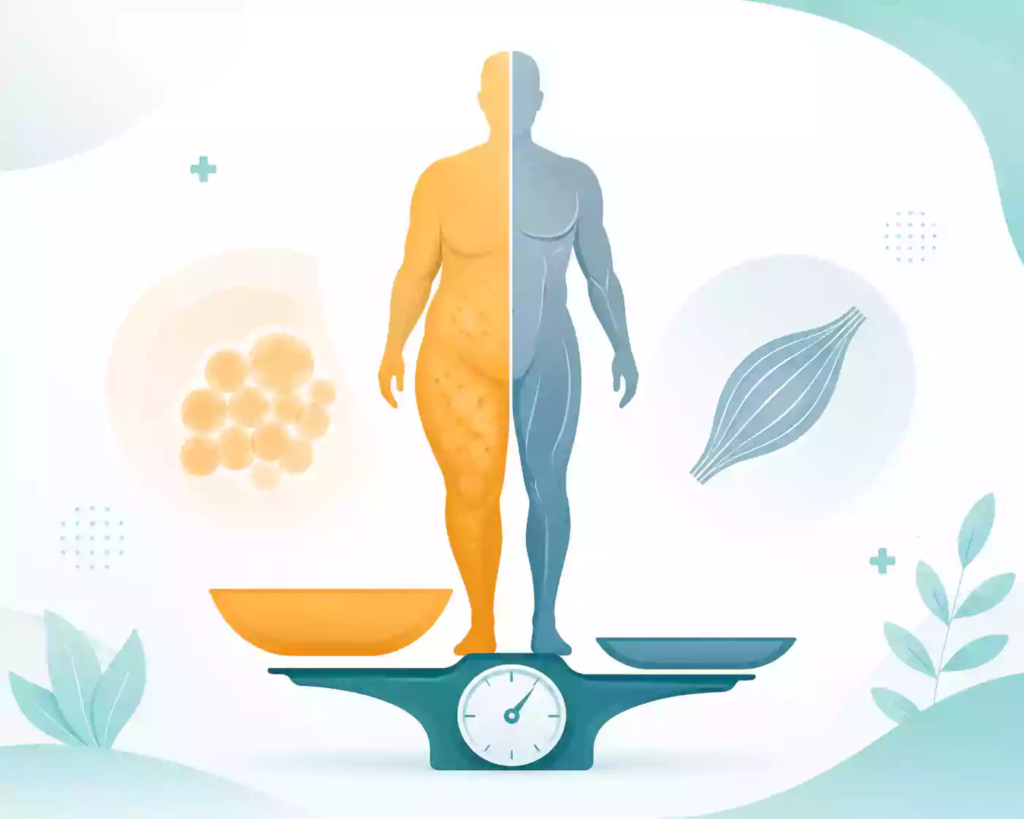
When you lose weight on a GLP-1 medication, your body does not only burn fat. It also breaks down muscle. Studies show that roughly 25% to 39% of the weight people lose on these medications comes from lean body mass — which includes muscle.
To put that in perspective: if you lose 30 pounds, anywhere from 7 to 12 of those pounds could be muscle, not fat. That is roughly equivalent to the amount of muscle a person would normally lose over an entire decade of aging — gone in just a few months.
Why Should You Care About Losing Muscle?
Muscle is not just for bodybuilders. It is your body’s engine, and it affects almost every aspect of your health:
- Muscle burns calories even when you are resting. The more muscle you have, the more calories your body burns throughout the day — even while sitting on the couch. Lose muscle, and your metabolism slows down, making it harder to keep weight off.
- Muscle keeps you strong and independent. It protects your joints, helps you climb stairs, carry groceries, play with your kids or grandkids, and prevents falls as you age.
- Muscle protects your bones. When you lose weight rapidly, you can also lose bone density. Strong muscles help keep your bones strong.
- Muscle affects your blood sugar. Muscle is where your body stores and uses glucose. Less muscle means worse blood sugar control — the opposite of what you want.
The Biggest Risk: What Happens When You Stop the Medication
Here is the part that worries doctors the most. Research shows that when people stop taking GLP-1 medications, they tend to regain weight. But the weight that comes back is mostly fat — not muscle. So you can end up in a worse position than where you started: heavier in fat, lighter in muscle. Doctors call this “sarcopenic obesity,” and it is associated with higher risks of diabetes, heart disease, falls, and loss of independence.
Think of it this way: imagine you traded in a reliable car engine for a smaller, weaker one — but kept adding weight to the trunk. That is what happens to your body when you lose muscle and regain fat.
The Good News: You Can Prevent This
The solution is straightforward, and it does not require anything fancy. Two things matter most, and they work best together — doing just one without the other is not enough.
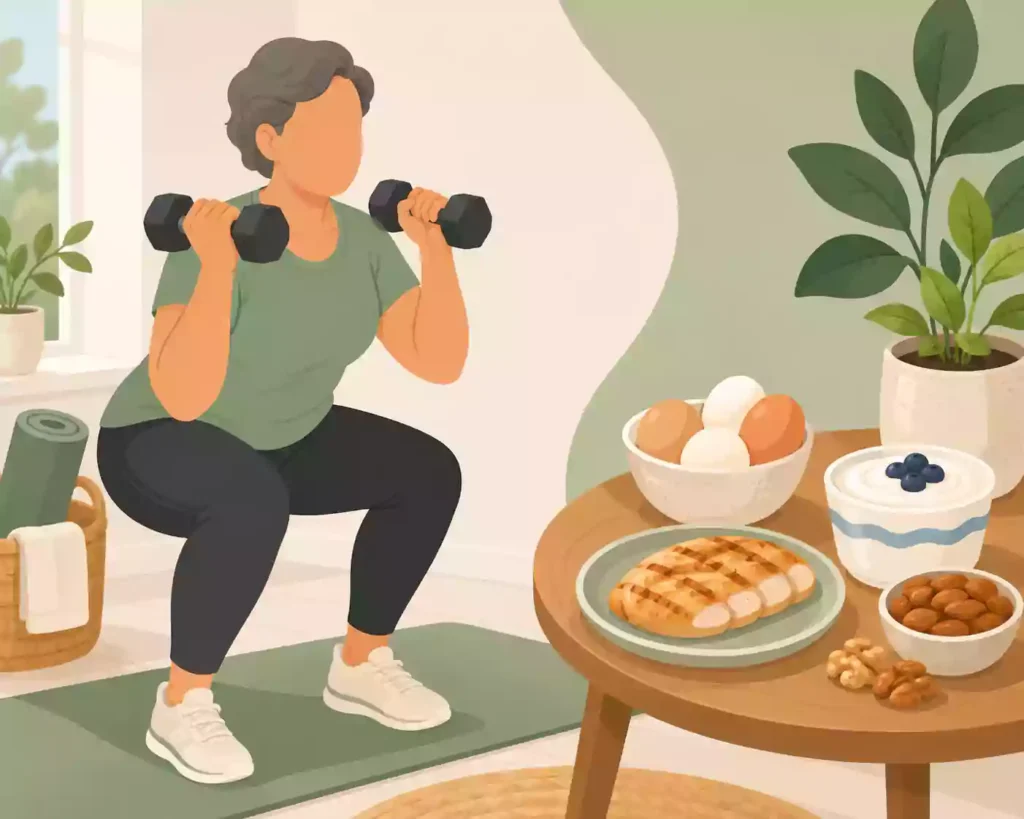
1. Strength Training (This Is the Big One)
Lifting weights or doing resistance exercises is the single most effective way to protect your muscles while losing weight. Studies show that people who do strength training during weight loss keep 50% to 95% more of their muscle compared to people who only diet or do cardio.
You do not need to become a gym rat. Here is a practical starting point:
Walking and cardio are great for your heart, but they do very little to preserve muscle — strength training is what matters here
Aim for 2 to 3 strength training sessions per week
Each session can be as short as 20 to 30 minutes
Focus on major muscle groups: legs (squats, lunges), chest and back (push-ups, rows), arms and shoulders
You can use dumbbells, resistance bands, machines, or even your own body weight
2. Eat Enough Protein (Even When You Are Not Hungry)
This is where GLP-1 medications create a unique challenge. These drugs work partly by reducing your appetite — which is great for weight loss, but it also means many people are not eating enough protein to maintain their muscles.
Most adults need about 0.8 grams of protein per kilogram of body weight per day just to get by. But when you are losing weight, experts recommend significantly more — about 1.2 to 1.6 grams per kilogram per day. For an 180-pound person, that is roughly 100 to 130 grams of protein daily.
Here are some practical tips:
- Eat protein first at every meal, before filling up on other foods
- Choose protein-rich foods that are easy to eat in smaller amounts: eggs, Greek yogurt, cottage cheese, chicken, fish, nuts, and seeds
- If you are struggling to eat enough, protein shakes or bars can help fill the gap
- Spread your protein throughout the day rather than trying to eat it all at once — your body uses it more efficiently that way
A quick reference for protein content:
- 1 egg = about 6 grams
- 1 cup of Greek yogurt = about 15 to 20 grams
- 1 chicken breast = about 30 grams
- 1 scoop of protein powder = about 20 to 25 grams
- 1 cup of cottage cheese = about 25 grams
What About Cardio and Walking?
Walking and aerobic exercise are wonderful for your heart, your mood, your blood sugar, and your overall health. Keep doing them. But when it comes to protecting muscle, cardio alone is not enough. Think of it this way:
- Cardio keeps your heart and lungs healthy
- Strength training keeps your muscles and bones healthy
- You need both
A good weekly routine might look like this:
- 150 minutes of moderate activity (walking, biking, swimming) spread across the week
- 2 to 3 sessions of strength training (20 to 30 minutes each)
A Note About Bone Health
Rapid weight loss — losing more than 14% of your body weight in 3 to 4 months — has been linked to loss of bone density. This is another reason why strength training matters: it helps protect your bones as well as your muscles. If you are losing weight quickly, talk to your provider about whether a bone density check (DEXA scan) is appropriate for you.
The Key to Long-Term Success with GLP-1 Weight Loss
GLP-1 medications are powerful tools for weight loss, and for many people, they are life-changing. But the medication alone is only part of the equation. To get the best long-term results — and to protect your health for years to come — you need to actively protect your muscle mass while losing weight.
The two non-negotiables:
- Strength train 2 to 3 times per week
- Eat 1.2 to 1.6 grams of protein per kilogram of body weight per day
These are not optional add-ons. They are essential partners to your medication. Your future self — stronger, leaner, and healthier — will thank you.
If you have questions about how to get started with strength training or how to optimize your nutrition while on GLP-1 therapy, please do not hesitate to reach out to our office. We are here to help you lose weight the right way — and keep it off.

Book a FREE 15-minute consultation to see if Phentermine is right for you.