




Yes — exercise, especially strength training, is essential while on GLP-1 medications like Ozempic, Wegovy, Mounjaro, or Zepbound. Without it, 25–39% of the weight you lose can come from muscle rather than fat, which slows your metabolism and makes long-term weight maintenance harder.
You would never skip brushing your teeth for a week and expect your mouth to be fine. You would never go months without showering and wonder why things felt off. These are non-negotiable things you do every day because the consequences of skipping them are obvious and immediate.
Exercise belongs in that same category. Not because someone told you to. Not because you’re chasing a certain look. But because your body was built to move, when it doesn’t, things start to break down quietly in the background.
The difference between brushing your teeth and exercising is timing. Skipping exercise doesn’t hurt right away; it creeps up. One day, you’re out of breath climbing stairs, your joints ache, sleep is off, mood is flat, and your provider is flagging blood pressure, blood sugar, or cholesterol numbers that weren’t there five years ago.
This is especially true if you’re taking a weight loss medication such as Ozempic, Wegovy, Mounjaro, or Zepbound. If you’re on one of these medications and skipping exercise, you’re leaving the most important part of the equation on the table — a point we go into more detail on in Why Protecting Your Muscles Matters on GLP-1 Medications.
What Exercise Actually Does for Your Body
Burning calories is one of the least important things exercise does. Here’s what’s really happening when you move regularly.
It Protects Your Heart
Regular activity lowers systolic blood pressure by roughly 3–4 mmHg, improves cholesterol, and reduces insulin resistance, a key factor in type 2 diabetes risk. A meta-analysis of over 30 million people found that hitting the recommended 150 minutes per week of moderate activity cuts the risk of dying from heart disease by about 29%. Even a single session can lower blood pressure and improve insulin sensitivity the same day. The American Heart Association’s 2026 scientific statement confirms that low cardiorespiratory fitness is an independent risk factor for cardiovascular disease regardless of body weight.
It Lowers Cancer Risk
Physical activity reduces the risk of at least eight cancer types, including breast, colon, kidney, bladder, endometrial, esophageal, lung, and stomach cancers, by 10% to 20%. For cancer survivors, regular post-diagnosis exercise is linked to a 35–50% reduction in cancer-specific death, particularly for breast, colorectal, and prostate cancers.
It Treats Depression and Anxiety
A 2026 meta-analysis of 63 studies covering almost 80,000 people found that exercise reduces depression symptoms with a moderate-to-large effect and meaningfully reduces anxiety. It performs on par with cognitive behavioral therapy and may outperform SSRIs for milder depression across all ages and exercise types, from walking to strength training to yoga.
It Improves Sleep
Exercise reduces the time to fall asleep, cuts nighttime waking, and improves sleep efficiency by modulating stress hormones, boosting brain-derived neurotrophic factor, regulating circadian rhythm, and lowering inflammation. Both cardio and resistance training help.
It Sharpens Your Brain
Regular activity improves cognition, lowers dementia and Alzheimer’s risk, and provides same-day benefits for focus and anxiety. Long-term activity is linked to better memory, faster processing speed, and stronger executive function.
It Extends Your Life
A study of over 500,000 adults found that combining moderate/vigorous cardio with strength training at least twice weekly cut all-cause mortality by up to 50% versus inactivity. A 2024 analysis of four multinational cohorts found that this protective effect holds across every adult age group and may strengthen with age.
It Protects Your Bones
Weight-bearing and resistance exercise build bone density and improve balance, lowering fall risk and fall-related injury especially important as we age. Managing weight and hormone health together also matters here, which is why some patients pair this with prediabetes screening early on.
Why Exercise Matters Even More on Weight Loss Medication
If you’re taking a GLP-1 medication, exercise moves from “important” to essential.
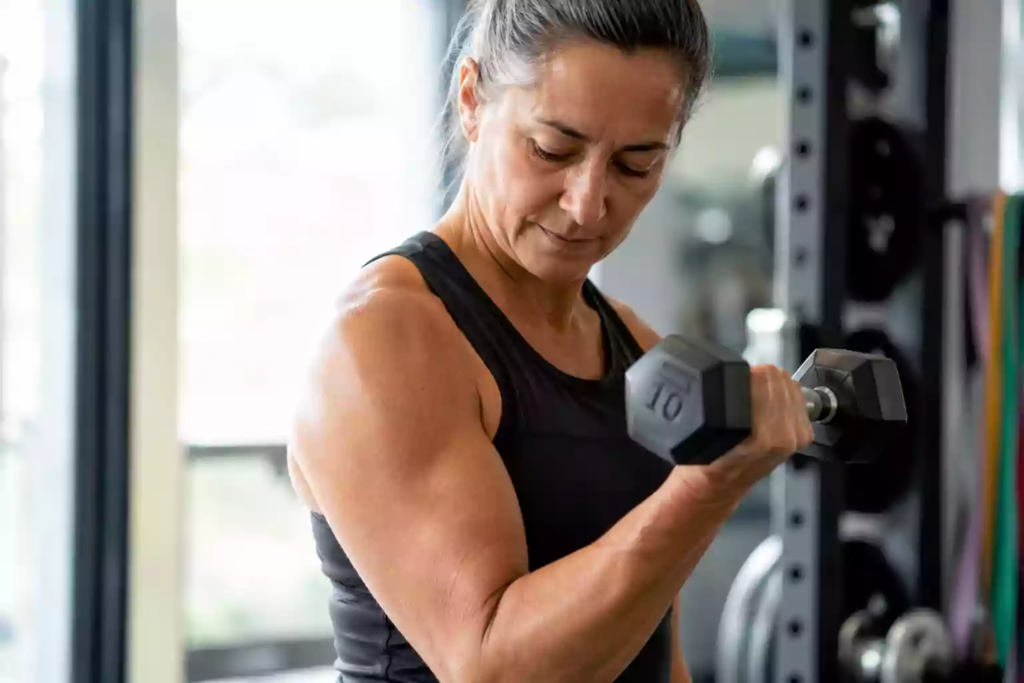
You’re losing muscle, not just fat. Studies show 25–39% of weight lost on GLP-1 medications is lean body mass — roughly a decade of aging-related muscle loss compressed into months. Muscle is your metabolic engine: it burns calories at rest, regulates blood sugar, and protects your joints.
Without exercise, metabolism slows. As muscle drops, so does your resting metabolic rate, making continued weight loss harder and regain easier. Strength training is the most effective countermeasure.
Regained weight is mostly fat. When people stop GLP-1 medications, research shows the regained weight is primarily fat, not muscle — creating a worse body composition (more fat, less muscle) known as sarcopenic obesity. Exercise during treatment guards against this.
Medication can’t do what exercise does. GLP-1 drugs reduce appetite and drive weight loss, but they don’t improve cardiorespiratory fitness, build strength, protect bones, or improve sleep. A randomized trial combining exercise with liraglutide produced 40% more weight loss than medication alone, plus better fitness, insulin sensitivity, bone health, and A1c.
Your bones are at risk, too. Losing more than 14% of body weight in 3–4 months is linked to significant bone density loss. In one trial, GLP-1 therapy alone decreased bone mineral density, while GLP-1 plus exercise preserved it.
Resistance training preserves up to 95% of your muscle. Studies on caloric restriction show strength training can cut lean-mass loss by 50–95% — arguably the single most impactful action you can take while on weight-loss medication. Our team covers this in more depth in our muscle-preservation guide for GLP-1 patients.
Exercise, GLP-1 Medications, and Weight Loss Support in Texas
Texas consistently ranks among the states with higher rates of obesity, type 2 diabetes, and heart disease, and GLP-1 prescriptions have risen sharply across the state in recent years. Texas’s size and climate add two extra challenges: long summers that push outdoor activity to early morning or evening, and large rural areas where in-person gym or clinic access can be limited. That’s exactly where telehealth makes a difference. Everest eClinic is expanding weight loss and diabetes care to patients across Texas, so you can pair GLP-1 treatment with expert guidance on strength training, nutrition, and metabolic health from home, no matter where in the state you live.
The Practical Prescription
Step 1 — Start moving. Any movement counts if you’re currently inactive: walk after meals, take the stairs, park farther away. Benefits begin immediately, even below official guidelines. Build toward 150 minutes per week of moderate activity (brisk walking, cycling, swimming) or 75 minutes of vigorous activity.

Step 2 — Add strength training. This is the game-changer, especially for weight-loss medication. Aim for 2–3 sessions weekly covering major muscle groups (legs, chest, back, shoulders, arms), 20–30 minutes each. Dumbbells, bands, machines, or bodyweight all work. Even one session a week is a meaningful start.
Step 3 — Make it a habit, not a project. You don’t “decide” to brush your teeth each morning — you just do it. Exercise needs the same automaticity: same time, same days, same routine. Structured, scheduled exercise produces the greatest benefits
What Counts as Exercise?
- Walking, especially brisk walking after meals
- Jogging or running
- Cycling (outdoor or stationary)
- Swimming
- Dancing
- Strength training (weights, bands, bodyweight)
- Yoga and Pilates
- Group fitness classes
- Hiking
- Playing sports
These findings reinforce the real-world effectiveness of Qsymia for weight loss when used appropriately.
Frequently Asked Questions
Why Exercise Is Non-Negotiable — On or Off Weight Loss Medication
Exercise isn’t a bonus; it’s a fundamental requirement for your body to function properly, alongside sleep, food, and water. It protects your heart, brain, bones, mood, sleep, and metabolism, and lowers your risk of cancer, diabetes, dementia, and premature death.
If you’re on weight loss medication, exercise is the difference between losing weight while keeping your muscle, strength, metabolism, and bone density intact and losing weight in a way that creates problems down the road.
Make it non-negotiable. Make it like brushing your teeth. Your future self will thank you.

If you have questions about how to start or what exercise is right for you, Book a FREE 15-minute consultation.