





Yes. Most people gain weight after stopping Ozempic, often regaining a significant portion of what they lost within a year. This isn’t a personal failure. It’s how the body responds when a chronic-disease medication is withdrawn. The good news: regain is manageable with the right plan, and you have options.
If you’ve lost weight on semaglutide, whether it’s Wegovy for weight loss or Ozempic for diabetes, you’ve probably had one fear in the back of your mind. What happens when I stop?
You’re not alone in worrying about this, and the concern is valid. Understanding why weight regain happens, and what you can do about it, can help you stay in control of your health.
What the Research Actually Shows
In the landmark STEP 1 extension trial, participants who stopped semaglutide after 68 weeks regained approximately two-thirds of the weight they had lost within one year of stopping. That’s a significant amount of regain, and it understandably scares people.
Here’s the context most headlines leave out: this is exactly what happens with every chronic disease medication.
- Stop blood pressure medication → blood pressure goes back up
- Stop a statin → cholesterol rises
- Stop insulin → blood sugar climbs
Nobody says those medications “failed.” We understand that chronic diseases require ongoing treatment
Obesity is no different. It’s a chronic, progressive disease driven by genetics, hormones, brain chemistry, and metabolism. The body actively fights weight loss through metabolic adaptation: hunger hormones increase, metabolism slows, and the brain’s reward system pushes toward calorie-dense foods. This is not a failure of willpower. It’s biology.
The STEP 4 Trial: What Happens When You Continue vs. Stop
The STEP 4 trial was designed specifically to answer this question. All participants received semaglutide 2.4 mg weekly for 20 weeks and lost an average of 10.6% of body weight. They were then randomly assigned to either continue semaglutide or switch to placebo for another 48 weeks.
The results:
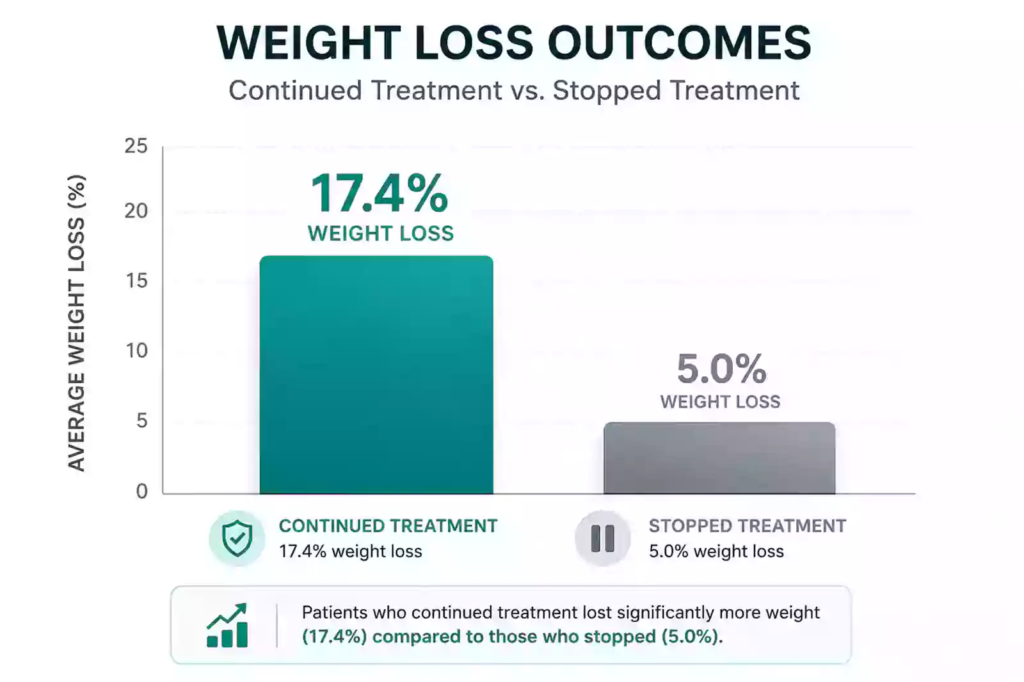
- Participants who continued semaglutide lost an additional 7.9% of body weight, for a total of 17.4% weight loss
- Participants who switched to placebo regained 6.9% of body weight, ending up with only 5.0% total weight loss
The gap between the two groups was 14.8 percentage points. Continuing the medication produced nearly three times more weight loss than stopping it.
But Do the Benefits Last If You Stay On It?
Yes. Long-term data from the STEP 5 trial showed that semaglutide 2.4 mg maintained weight loss of approximately 15% over two full years with continued treatment. The SELECT trial went even further. As the largest cardiovascular outcomes trial of semaglutide, it showed sustained weight loss and cardiovascular protection over more than three years of follow-up.
This tells us something important: semaglutide doesn’t “stop working.” As long as you continue taking it, the benefits persist.
Why Do People Gain Weight After Stopping Ozempic?
When you stop semaglutide, several things happen at once:
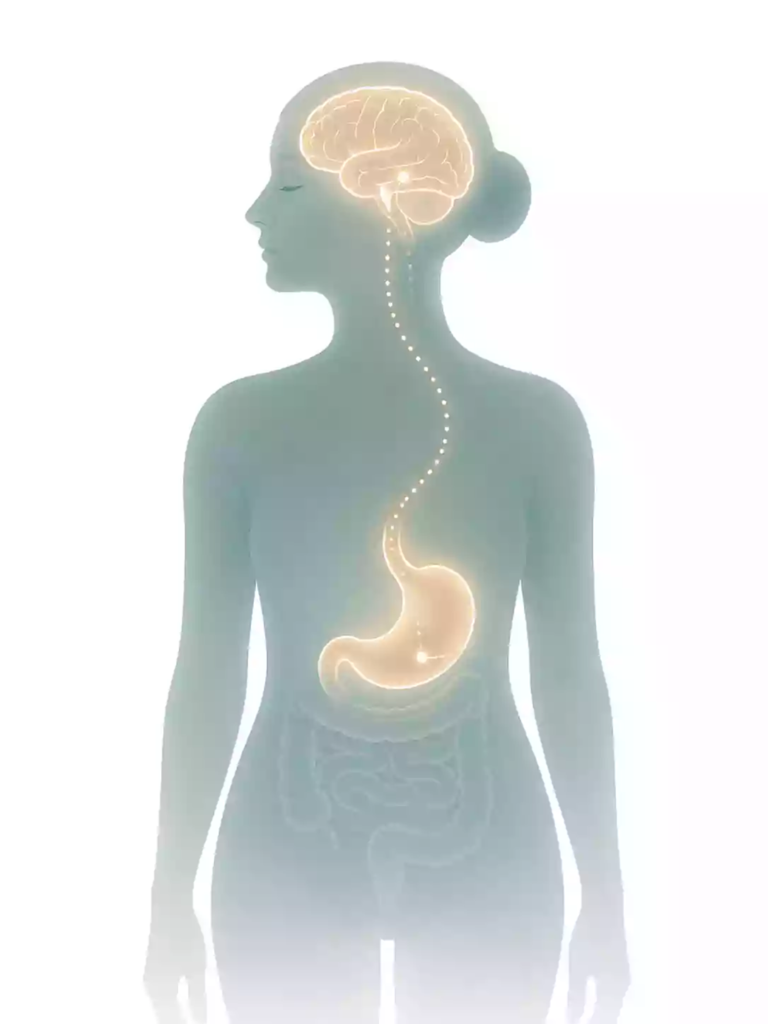
Your appetite returns. Semaglutide activates GLP-1 receptors in the brain that control hunger and satiety. When the medication is removed, those signals return to their pre-treatment state. The “food noise” comes back. Cravings return. The feeling of being satisfied after a reasonable meal fades.
Your metabolism has already adjusted. During weight loss, your body reduces its resting metabolic rate and burns fewer calories at rest. This metabolic adaptation persists even after you stop losing weight. So you’re eating more (appetite is back) while burning less (metabolism has slowed). The math works against you.
Your hormones shift back. Ghrelin (the hunger hormone) rises, while leptin (the satiety hormone) drops. Your body is hormonally primed to regain weight.
The weight that comes back is mostly fat. This is perhaps the most concerning finding. When you lose weight, you lose both fat and muscle. When you regain weight, the weight that returns is predominantly fat. Body composition can actually be worse after a cycle of losing and regaining: more fat, less muscle, slower metabolism. This is called sarcopenic obesity, and it’s associated with higher risks of metabolic disease, falls, fractures, and loss of independence.
So What Should You Do?
The answer isn’t to avoid the medication out of fear of regain. The answer is to have a plan.
Option 1: Continue treatment long-term
For many people, this is the most effective strategy. Obesity is a chronic disease, and long-term treatment produces long-term results. Your Everest eClinic provider can help you find the lowest effective dose for maintenance.
Option 2: Ozempic Taper-Off Schedule
Some patients maintain their weight loss on lower doses, such as 0.5 mg or 1.0 mg weekly instead of the full 2.4 mg. A case series found that patients who transitioned from weekly to every-other-week dosing maintained their weight loss and metabolic improvements for an average of 36 weeks. This approach can reduce cost and side effects while preserving results.
Option 3: Build a strong foundation during treatment
If you plan to eventually stop the medication, use the time while you’re on it to build habits that support you afterward:
- Strength train at least 2 to 3 times per week to preserve muscle mass
- Eat adequate protein (1.2 to 1.5 g/kg/day)
- Establish consistent exercise routines
- Work with a dietitian or behavioral health specialist
The exercise component is especially critical. A landmark trial published in the New England Journal of Medicine found that combining GLP-1 therapy with structured exercise produced 40% more weight loss than medication alone. It was also the only approach that preserved bone density, improved cardiovascular fitness, and maintained muscle mass. Building muscle during treatment creates a metabolic safety net. It makes weight regain less likely, and less harmful if it does occur.
Semaglutide Dosing Schedule
Wegovy (for weight loss): Start at 0.25 mg weekly for 4 weeks. Increase every 4 weeks through 0.5 mg, 1.0 mg, and 1.7 mg. The maintenance dose of 2.4 mg weekly is reached by week 17.
Ozempic (for type 2 diabetes): Start at 0.25 mg weekly for 4 weeks (a tolerability dose, not for blood sugar control). Then increase to 0.5 mg or 1.0 mg weekly for maintenance. The maximum dose is 2.0 mg weekly if needed.
Frequently Asked Questions
What This Means for You
Yes, people gain weight after stopping Ozempic, and that’s real. But it’s not inevitable, and it’s not a reason to avoid treatment. It’s a reason to plan. Work with your provider to determine whether long-term treatment, dose reduction, or a structured transition plan is right for you. The worst outcome isn’t taking the medication and regaining weight. It’s never starting treatment at all because of fear.
Schedule an appointment today to discuss personalized strategies to maintain your progress and continue your journey to better health.
Sincerely,
Geeta Sharma,
DNP Endocrinology Nurse Practitioner
Everest Diabetes & Weight Loss
Connecticut: (203) 689-0558 Office Phone or Text
Texas: Call: 512-541-2126

This article is for informational purposes and does not replace individualized medical advice. Talk to your provider before starting or stopping any medication.