
If you are taking a weight loss medication like Ozempic, Wegovy, Mounjaro, or Zepbound, you might think the medication is doing all the heavy lifting. It is doing a lot. These medications are powerful tools that reduce appetite, lower blood sugar, and help your body shed fat. But the research on exercise and GLP-1 weight loss tells a more complete story.
Here is what most people do not realize: adding exercise to your medication can increase your total weight loss by approximately 40% compared to taking the medication alone.
That is not a guess. A rigorous clinical trial published in the New England Journal of Medicine proved it.
The Study That Proved Exercise and GLP-1 Work Better Together
In 2021, researchers in Denmark conducted a randomized, placebo-controlled trial with 195 adults with obesity. Everyone first lost weight on a low-calorie diet for 8 weeks. Researchers then split them into four groups for one full year:
- Group 1: Exercise only (no medication)
- Group 2: Liraglutide only (a GLP-1 medication, 3.0 mg daily — no structured exercise)
- Group 3: Exercise + liraglutide (both together)
- Group 4: Placebo + no exercise (control group)
Here is what happened after one year:
- Exercise alone: Lost 4.1 kg (about 9 lbs)
- Medication alone: Lost 6.8 kg (about 15 lbs)
- Exercise + medication: Lost 9.5 kg (about 21 lbs)
- Placebo: Regained weight
The combination group lost approximately 40% more weight than the medication-alone group, and nearly 2.5 times more than exercise alone.
But the weight loss numbers are only part of the story. What makes this study so important is what happened beyond the scale.
What Combining Exercise and GLP-1 Medication Does That Neither Can Do Alone
Here is the part that should change how you think about exercise and medication together. Only the combination group improved all of the following:
- Hemoglobin A1c (a measure of long-term blood sugar control)
- Insulin sensitivity (how well your body responds to insulin)
- Cardiorespiratory fitness (how efficiently your heart and lungs work)
- Bone mineral density (the strength of your bones)
The medication alone did not improve fitness or bone health, and exercise alone did not improve blood sugar as much. Together, they covered all the bases.
Want a treatment plan that includes exercise guidance from day one? Book a free consult with Everest eClinic and we’ll build it into your GLP-1 program.
The medication-only group actually lost bone density at the hip and spine, a known risk of rapid weight loss. The combination group preserved bone density completely. That marks a critical difference, especially for women and older adults who already face a higher risk for osteoporosis.
The combination group also lost twice as much body fat percentage as either treatment alone, meaning they were not just losing weight. They were losing the right kind of weight.
Why Does Exercise Make GLP-1 Medication Work Better?
It comes down to biology. Here is what exercise does that the medication cannot:
Burns fat more efficiently. Low- to moderate-intensity aerobic exercise promotes fat oxidation, especially in visceral fat (the dangerous fat around your organs). It also increases mitochondrial function, the energy-producing machinery inside your cells, which improves your body’s ability to burn fat around the clock.
Protects your muscle. Weight loss medications cause your body to lose both fat and muscle. Studies show that 25% to 39% of the weight lost on GLP-1 medications is lean body mass, which includes muscle. That roughly equals a decade or more of aging-related muscle loss, happening in just months. Resistance training directly counters this because it stimulates muscle protein synthesis and slows muscle breakdown.
Keeps your metabolism from slowing down. When you lose weight, your resting metabolic rate drops, so your body burns fewer calories at rest. This is one of the main reasons weight loss plateaus and weight regain happen. Exercise, especially strength training, increases resting metabolic rate by building and maintaining muscle mass. Research confirms that nonextreme levels of exercise do not slow your metabolism or increase food intake enough to cancel out the calories burned.
Improves insulin sensitivity through different pathways. GLP-1 medications improve blood sugar by stimulating insulin release and suppressing glucagon. Exercise improves insulin sensitivity at the muscle level instead, by increasing glucose uptake into muscle cells, enhancing mitochondrial function, and reducing ectopic fat (fat stored in places it should not be, like the liver and muscles).
Reduces inflammation. Exercise stimulates the release of myokines, anti-inflammatory molecules produced by working muscles, including interleukin-6 and irisin. These molecules improve metabolism and reduce the chronic low-grade inflammation that drives obesity, diabetes, and heart disease. Our diabetes and pre-diabetes care program addresses this same inflammatory pathway from the medical side.
Does GLP-1 Cause Muscle Loss? What Happens When You Stop Medication Without Exercise
This is where the story gets serious. Studies show that people who stop GLP-1 medications typically regain at least two-thirds of the weight they lost within one year, and the weight that comes back is mostly fat, not muscle.
So say you lost 30 pounds on medication, 20 pounds of fat and 10 pounds of muscle, and then regained 20 pounds after stopping. That 20 pounds is almost entirely fat. You now have less muscle and more fat than when you started. Clinicians call this sarcopenic obesity, and it raises the risk of falls, fractures, metabolic disease, and loss of independence.
Exercise during treatment helps prevent this outcome. Preserving muscle while you lose weight builds a metabolic foundation that makes weight regain less likely, and less harmful if it does happen.
What Kind of Exercise Should You Do on Ozempic, Wegovy, or Mounjaro?
The exercise program in the clinical trial included two supervised sessions per week (30 minutes of vigorous cycling followed by 15 minutes of circuit training, a combination of cardio and strength) and two unsupervised sessions per week (brisk walking, running, or cycling). That adds up to four sessions per week, a realistic and achievable goal for most people.
Based on this trial and current guidelines from the American Heart Association, here is what we recommend:
Aerobic exercise: At least 150 minutes per week of moderate-intensity activity (brisk walking, cycling, swimming) or 75 minutes per week of vigorous activity. Walking after meals ranks among the simplest and most effective strategies.
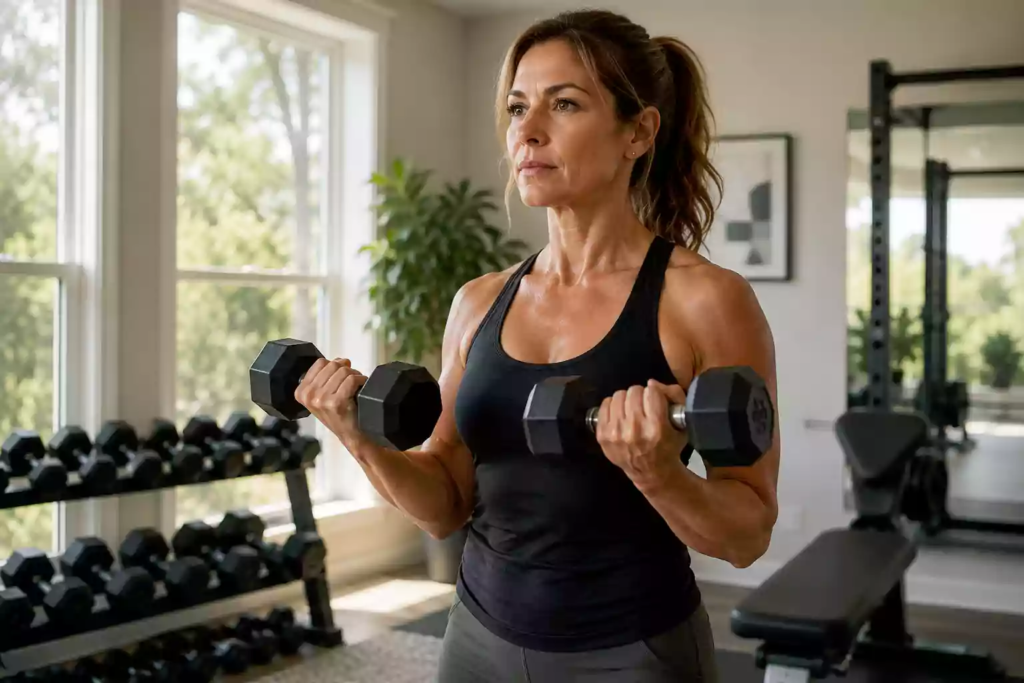
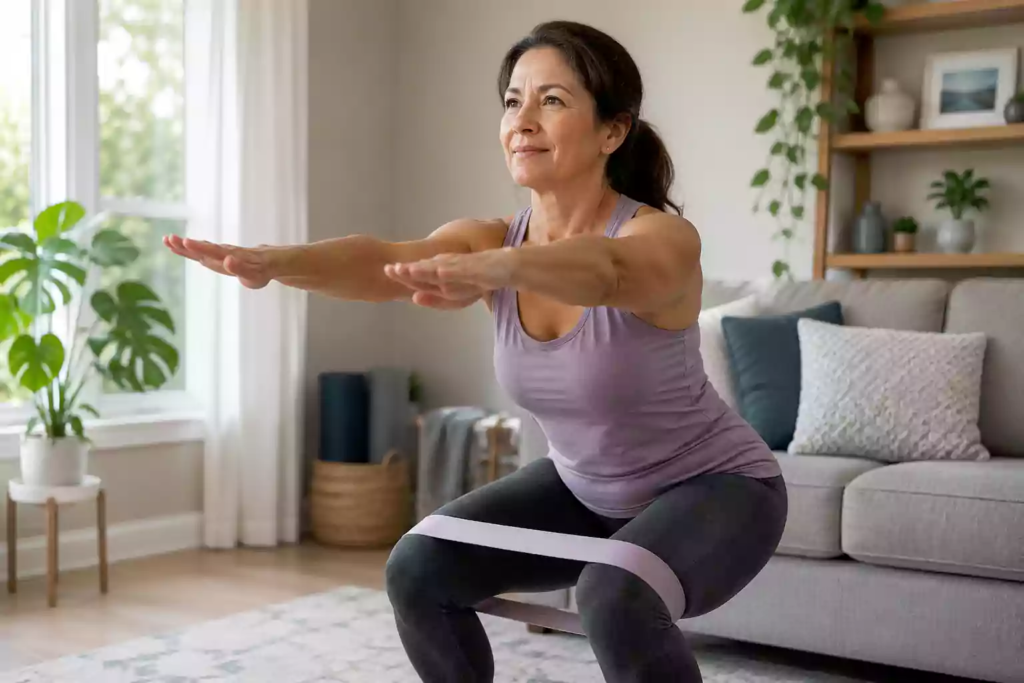
Strength training: At least 2–3 sessions per week targeting major muscle groups (legs, chest, back, shoulders, arms). This is the single most important type of exercise for preserving muscle during weight loss. You can use dumbbells, resistance bands, machines, or your own body weight.
Protein intake matters too. Exercise and protein work together, so aim for adequate protein at each meal to give your muscles the building blocks they need to repair and grow. Eat protein-rich foods first in a meal, especially when appetite drops from medication. Our nutrition counseling program builds these protein targets directly into your weight loss plan.
GLP-1 and Bone Density: Your Bones Are at Risk Too
Rapid weight loss, whether from medication, surgery, or extreme dieting, causes bone loss. In the clinical trial described above, the medication-only group experienced significant decreases in bone mineral density at the hip and spine, the two most important sites for fracture risk.
The combination group’s bone density stayed completely preserved. Exercise protects bones through mechanical loading (the physical stress of movement on bone) and through hormonal and metabolic pathways that stimulate bone formation.
This matters especially for:
- Women approaching or in menopause
- Adults over 50
- Anyone with a family history of osteoporosis
- Anyone losing weight rapidly (more than 14% of body weight in 3–4 months)
Combining Exercise and GLP-1 Weight Loss for Better Results
Weight loss medication is a powerful tool, but it is not the whole toolbox.
Exercise does not just add a little extra weight loss on top of the medication. It fundamentally changes the quality of the weight you lose: more fat, less muscle, stronger bones, better fitness, improved blood sugar, and a faster metabolism.
Skip exercise, and you may lose weight along with muscle, bone density, and metabolic resilience. Add exercise, and you lose weight while you gain health.
The clinical evidence is clear. Exercise plus GLP-1 medication produces approximately 40% more weight loss, twice the body fat reduction, and improvements in fitness, blood sugar, insulin sensitivity, and bone health that medication alone cannot achieve.
Make exercise part of your treatment plan, not an afterthought. Your medication works better when your body is moving.
If you have questions about how to start or what exercise is right for you, Book a FREE 15-minute consultation.
Frequently Asked Questions
References
References: This blog post is built around the landmark New England Journal of Medicine randomized clinical trial by Lundgren et al. (2021), which demonstrated that combining exercise with liraglutide produced 9.5 kg of weight loss versus 6.8 kg with liraglutide alone — approximately 40% more — while also being the only strategy that improved HbA1c, insulin sensitivity, cardiorespiratory fitness, and bone health simultaneously. The bone density data comes from a secondary analysis of the same trial published in JAMA Network Open, showing that GLP-1 therapy alone decreased hip and spine BMD while the combination with exercise preserved it completely. The lean mass loss figures (25–39% of total weight lost) and the concern about sarcopenic obesity from weight regain are from a 2026 JAMA viewpoint and a 2024 Diabetes Care narrative review. The metabolic mechanisms of exercise — including fat oxidation, mitochondrial function, myokine release, and resting metabolic rate preservation — are detailed in the 2026 JAMA analysis. The AHA 2026 scientific statement supports the recommendation for structured exercise alongside GLP-1 therapy, noting that exercise provides improvements in cardiorespiratory fitness and cardiometabolic risk factors that GLP-1 therapy alone does not achieve. The joint advisory from four obesity and nutrition societies recommends that GLP-1 medications be prescribed together with structured exercise programs, including strength training at least 3 times weekly plus 150 minutes of moderate aerobic exercise.
Sincerely,
Geeta Sharma,
DNP Endocrinology Nurse Practitioner
Everest Diabetes & Weight Loss
Office Phone or Text: (203) 689-0558