




If you have been told you have a “fatty liver,” you are not alone. Fatty liver disease affects roughly one in three adults in the United States. For years, there was no FDA-approved medication to treat it. That has now changed, and semaglutide is leading the way.
What Is Fatty Liver Disease?
Fatty liver disease, now officially called metabolic dysfunction-associated steatotic liver disease (MASLD), occurs when too much fat accumulates in the liver. In its earliest stage, it is simply excess fat without significant inflammation or damage. Many people have MASLD and do not even know it.
In some people, that fat triggers inflammation and liver cell damage. This more serious form is called MASH (metabolic dysfunction-associated steatohepatitis, formerly known as NASH). MASH affects roughly 6% of U.S. adults, or about 15 million people, according to the FDA. It is serious because it can progress to:
- Liver fibrosis (scarring)
- Cirrhosis (severe scarring that impairs liver function)
- Liver failure
- Hepatocellular carcinoma (liver cancer)
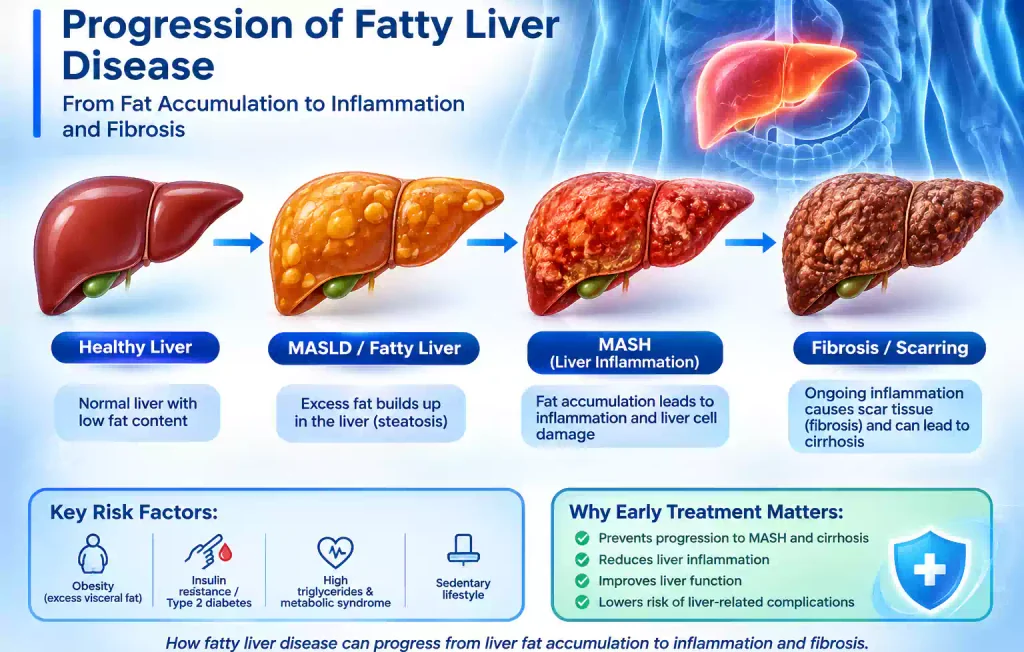
The progression from simple fatty liver to MASH to cirrhosis can take years or even decades. Once cirrhosis develops, the damage is largely irreversible. That is why early treatment matters.
What Causes Fatty Liver?
The primary drivers are:
- Obesity, especially excess visceral fat
- Insulin resistance and type 2 diabetes
- High triglycerides and metabolic syndrome
- A sedentary lifestyle
These are the same conditions that GLP-1 medications are designed to address. That is not a coincidence. It is a core reason why semaglutide works so well against fatty liver disease.
If you are already working on medical weight loss at Everest eClinic, there is a good chance your liver health is also improving alongside your weight.
The ESSENCE Trial: The Study That Changed Everything
The phase 3 ESSENCE trial was the landmark study behind the FDA approval. It enrolled patients with biopsy-confirmed MASH and moderate to advanced liver fibrosis, meaning participants had significant liver disease, not just mild fat accumulation.
The results were striking:
- 62.9% of patients on semaglutide had resolution of their MASH (liver inflammation) compared to 34.3% on placebo
- 37% of semaglutide users showed improvement in liver fibrosis compared to roughly 23% in the placebo group
- Liver enzymes (ALT and AST) decreased significantly, confirming reduced ongoing liver damage
- Patients also lost meaningful weight and saw improvements in blood sugar and cardiovascular risk factors
Based on these results, the FDA granted accelerated approval to Wegovy (semaglutide 2.4 mg) in August 2025 for the treatment of noncirrhotic MASH with moderate to advanced fibrosis (stages F2 to F3). This makes semaglutide the first GLP-1 receptor agonist approved specifically for liver disease. A confirmatory study is ongoing to satisfy the full approval requirements.
How Semaglutide Helps the Liver
Semaglutide improves fatty liver disease through several mechanisms working together.
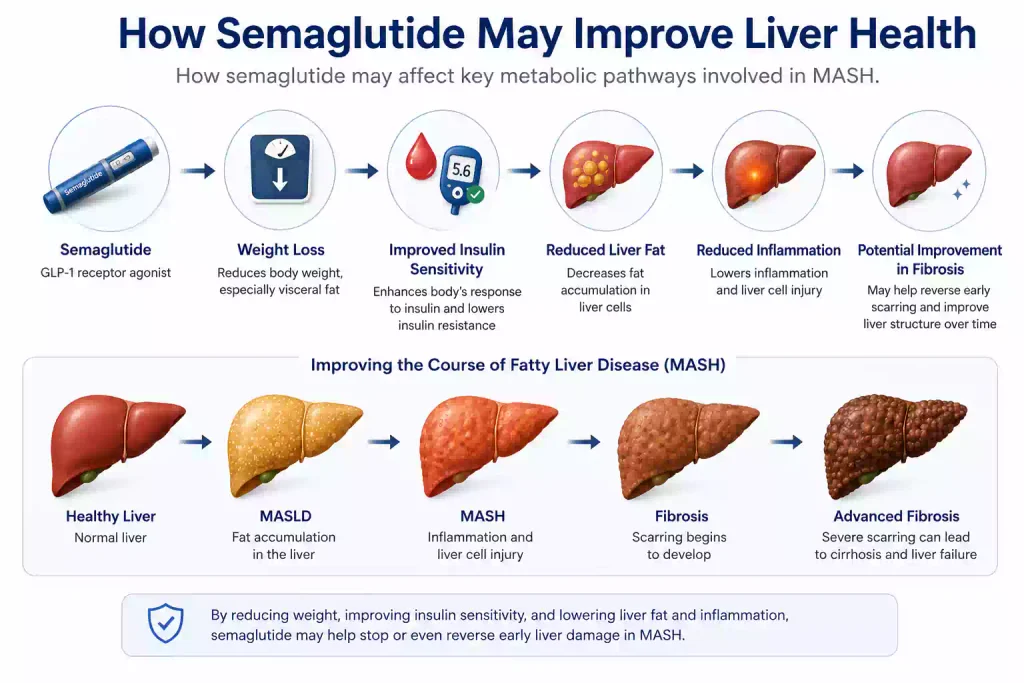
It reduces liver fat
By promoting weight loss, especially visceral fat loss, semaglutide directly reduces the amount of fat deposited in the liver. MRI studies have documented liver fat reductions of 30 to 60% with semaglutide treatment.
It improves insulin resistance
Insulin resistance is the primary driver of fat accumulation in the liver. When your body does not respond well to insulin, it stores excess energy as fat, and the liver is one of the first places that fat lands. Semaglutide improves insulin sensitivity, which helps stop new fat from building up.
It reduces liver inflammation
Liver scarring was previously thought to be largely irreversible without transplantation. The ESSENCE trial showed that semaglutide can improve fibrosis scores, suggesting that early scarring may respond to the right treatment.
It is safe for the liver
Unlike many medications metabolized by the liver that can worsen existing liver disease, semaglutide does not raise liver enzymes. It is considered safe for patients with liver disease, including those with compensated cirrhosis.
Real-World Data: What Studies Outside Clinical Trials Show
Beyond the clinical trials, real-world data have been equally encouraging. A large study published in JAMA Internal Medicine found that patients with fatty liver disease who took GLP-1 medications had a 77% lower risk of all-cause mortality and a significantly lower risk of progressing to cirrhosis compared to patients on other diabetes medications.
Another study found that GLP-1 medications reduced the risk of developing cirrhosis, liver decompensation (liver failure), and hepatocellular carcinoma (liver cancer) in patients with existing fatty liver disease.
Who Should Consider Semaglutide for Fatty Liver?
Semaglutide may be appropriate if any of the following apply to you:
- You have been diagnosed with fatty liver disease (MASLD) on ultrasound or imaging
- You have elevated liver enzymes (ALT or AST) without another clear explanation
- You have risk factors for MASH: obesity, type 2 diabetes, metabolic syndrome, or high triglycerides
- You have biopsy-confirmed MASH with moderate to advanced fibrosis
- You have fatty liver alongside other conditions that semaglutide treats, in which case one medication may address multiple problems at once
This is one of the more compelling aspects of semaglutide. For patients managing type 2 diabetes or pre-diabetes alongside a fatty liver diagnosis, the medication may offer meaningful benefit across multiple conditions simultaneously.
What About Other Liver Conditions?
Semaglutide is studied and FDA-approved specifically for MASH caused by metabolic dysfunction. It is not a treatment for:
- Alcoholic liver disease
- Viral hepatitis (hepatitis B or C)
- Autoimmune hepatitis
- Genetic liver conditions such as Wilson’s disease or hemochromatosis
If your liver disease has a different cause, talk to your provider about the right treatment for your situation.
Is Semaglutide Right for Your Fatty Liver? Key Takeaways
Fatty liver disease is the most common liver condition in the world, and for years there was no approved medication to treat it. Semaglutide has changed that. By reducing liver fat, calming inflammation, improving insulin resistance, and potentially improving early scarring, semaglutide now offers a real treatment path for millions of people with MASH.
If you have been told you have a fatty liver, or if you have risk factors like obesity, diabetes, or metabolic syndrome, talk to your provider about whether semaglutide is right for you. Early treatment can prevent progression to cirrhosis and liver failure. Do not wait until the damage is done.
Frequently Asked Questions
Contact Everest eClinic to speak with a provider about your options.
Sincerely,
Geeta Sharma,
DNP Endocrinology Nurse Practitioner
Everest Diabetes & Weight Loss
Connecticut: (203) 689-0558 Office Phone or Text
Texas: Call: 512-541-2126

This article is for informational purposes and does not replace individualized medical advice. Talk to your provider before starting or stopping any medication.