





Semaglutide does more than shrink your waistline. Clinical trials consistently show it also lowers C-reactive protein (CRP), the body’s main marker of inflammation, independent of how much weight a patient loses. That matters because chronic inflammation quietly drives heart disease, fatty liver, joint pain, and a long list of other conditions most people never connect back to their weight.
Key Takeaways
- Semaglutide lowers CRP by roughly 39-48% compared to placebo across the STEP 1, 2, and 3 trials.
- The SELECT trial, which followed 17,604 people for an average of over three years, found semaglutide reduced major cardiovascular events by 20%.
- Semaglutide is now FDA-approved to treat MASH (a serious fatty liver disease), not just obesity and diabetes.
- The anti-inflammatory effect works through several pathways at once: less visceral fat, better gut barrier health, improved insulin sensitivity, and lower oxidative stress.
What Is Chronic Inflammation?
Inflammation is your body’s natural response to injury or infection. Cut your finger, and inflammation sends immune cells to fight bacteria and start healing. That’s acute inflammation. It’s helpful, and it’s temporary.
Chronic inflammation is different. It’s a low-grade, persistent state of immune activation that damages your tissues over months and years. You can’t feel it happening. You can’t see it. But it’s linked to nearly every major chronic disease: heart disease, type 2 diabetes, fatty liver disease, Alzheimer’s disease, certain cancers, autoimmune conditions, and chronic pain.
One of the biggest drivers of chronic inflammation is excess body fat, especially visceral fat, the fat stored deep inside your abdomen, around your organs.
How Excess Fat Creates Inflammation
Fat tissue isn’t just storage. It’s an active endocrine organ that produces hormones and inflammatory molecules. When you carry excess visceral fat, your fat cells release inflammatory signals, including C-reactive protein, interleukin-6 (IL-6), and tumor necrosis factor-alpha (TNF-alpha), directly into your bloodstream. Those signals travel throughout your body, damaging blood vessels, impairing insulin function, promoting liver fat accumulation, and accelerating aging.
The more visceral fat you carry, the more inflammation you produce. And the more inflammation you produce, the harder it becomes to lose weight, because inflammation itself worsens insulin resistance, increases hunger, and promotes fat storage. It’s a loop that feeds itself.
How Semaglutide Breaks the Cycle
Semaglutide attacks inflammation through several pathways at the same time.
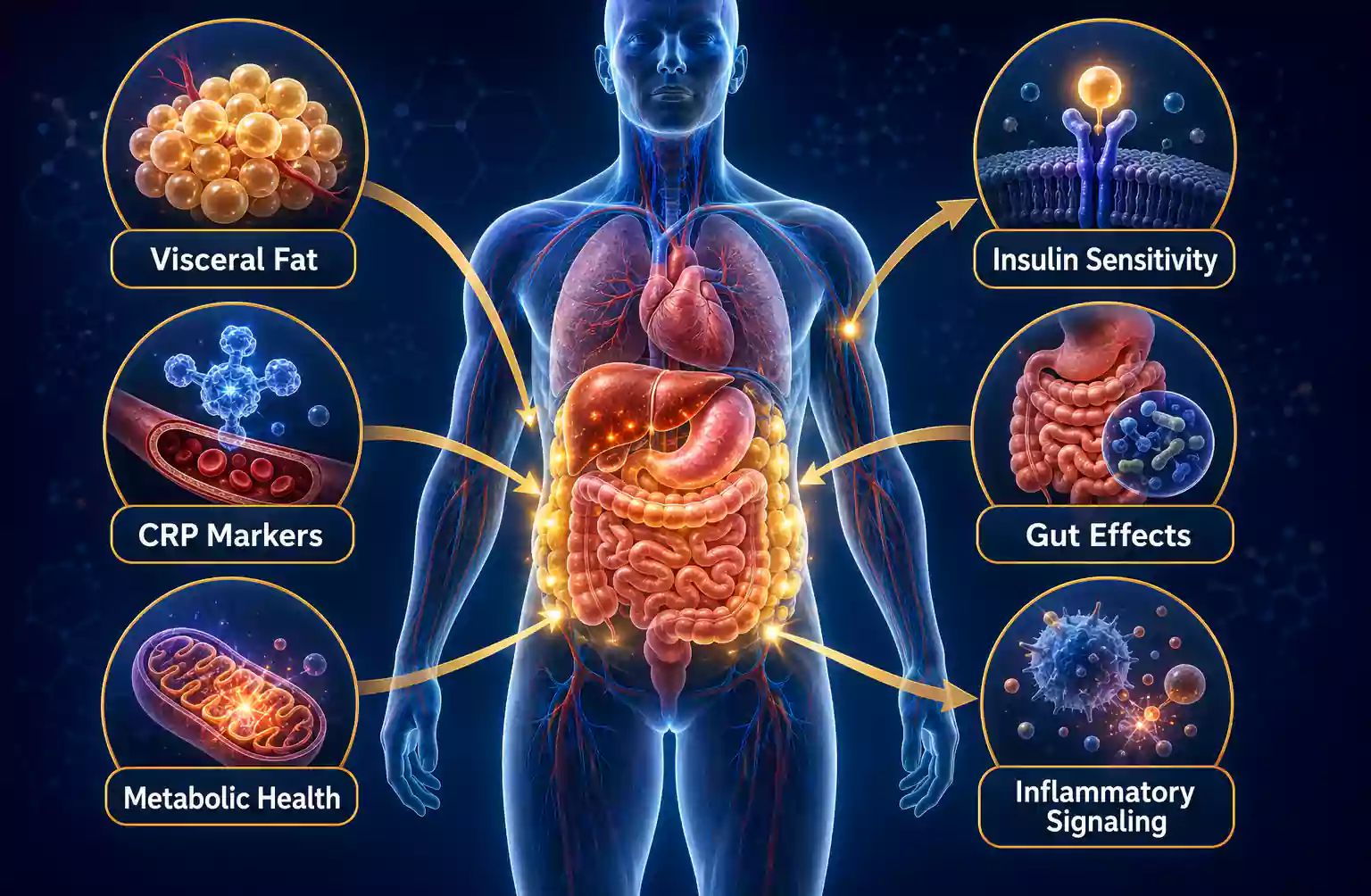
It reduces visceral fat
Semaglutide promotes significant weight loss with a disproportionate reduction in visceral fat specifically, the most metabolically dangerous type. Less visceral fat means fewer inflammatory immune cells (macrophages) living in that tissue, and fewer inflammatory signals reaching your bloodstream.
It directly lowers inflammatory markers
In a 2022 analysis of the STEP 1, 2, and 3 trials, semaglutide 2.4 mg reduced CRP at week 68 compared to placebo by 44% in STEP 1, 39% in STEP 2, and 48% in STEP 3, all statistically significant results, and consistent regardless of a patient’s starting weight or blood sugar status. The reductions showed up within the first 20 weeks and tracked closely with weight loss. Separately, a 2024 systematic review pooling 13 randomized trials and more than 26,000 patients confirmed the same pattern: semaglutide lowers CRP more than placebo, across different doses and patient populations. In the SELECT trial, which followed 17,604 adults with established cardiovascular disease for over three years, semaglutide reduced major cardiovascular events (heart attack, stroke, and cardiovascular death) by 20% compared to placebo, a result researchers believe is driven in part by this anti-inflammatory effect, not by weight loss alone.
It improves gut health
GLP-1 is a hormone naturally produced in the gut. Semaglutide mimics this hormone and helps support the gut barrier. A compromised gut barrier, sometimes called a “leaky gut,” allows bacterial products to enter the bloodstream and trigger inflammation throughout the body. By supporting gut barrier integrity, semaglutide may reduce this source of inflammation.
It improves insulin sensitivity
Insulin resistance and inflammation feed each other in a loop, each one making the other worse. Semaglutide breaks that loop by improving how your body responds to insulin, which in turn reduces the inflammatory signals generated by insulin resistance.
It lowers oxidative stress
Oxidative stress happens when harmful molecules called free radicals damage your cells and tissues, which in turn triggers inflammation. Research suggests GLP-1 receptor agonists like semaglutide reduce oxidative stress, adding another layer of protection.
Why This Matters for Your Health
Heart protection
Inflammation damages blood vessel walls and promotes plaque buildup (atheroWhy This Matters for Your Healthsclerosis). By lowering CRP and other inflammatory markers, semaglutide helps protect your arteries. The SELECT trial’s 20% reduction in major cardiovascular events is one of the clearest real-world demonstrations of this effect. If you’re managing diabetes care in CT and TX alongside cardiovascular risk factors, this is one of the strongest reasons semaglutide is worth discussing with your provider.
Liver protection
Inflammation in the liver drives the progression from simple fatty liver to MASH (metabolic dysfunction-associated steatohepatitis, formerly called NASH), a condition that can lead to cirrhosis and liver cancer. In August 2025, the FDA approved injectable semaglutide (Wegovy) specifically to treat MASH in adults with moderate-to-advanced liver fibrosis, based on trial results showing semaglutide improved liver scarring and resolved steatohepatitis in significantly more patients than placebo.
Joint protection
Inflammation drives cartilage breakdown in osteoarthritis. Researchers have found GLP-1 receptors directly in cartilage cells, and semaglutide may have anti-inflammatory effects on joints beyond what weight loss alone would explain. Some patients on semaglutide report meaningful improvement in knee pain and stiffness, likely due to a combination of reduced inflammation, reduced joint load, and better blood sugar control.
Brain protection
Neuroinflammation is increasingly recognized as a driver of cognitive decline and neurodegenerative disease. Early research suggests GLP-1 receptor agonists may have neuroprotective effects tied to their anti-inflammatory properties, an area still being actively studied.
Beyond Weight Loss: Why Semaglutide’s Anti-Inflammatory Power Matters
Semaglutide isn’t just a weight-loss medication that happens to reduce inflammation as a side effect. For many patients, the reduction in inflammation is one of the most important, and most overlooked, benefits of the drug. By lowering CRP, reducing visceral fat, improving gut health, and interrupting the inflammation-insulin resistance cycle, semaglutide helps protect your heart, liver, joints, and possibly your brain, all at once.
If your labs show elevated CRP, or you’re dealing with metabolic syndrome, fatty liver, or chronic joint pain, the anti-inflammatory effects of semaglutide may be especially relevant to your care. A nutrition counseling plan alongside treatment can help reinforce these benefits, since diet plays a direct role in insulin sensitivity and inflammation.
Talk to your provider or our Board Certified Nurse Practitioner about whether semaglutide fits your overall health picture, not just your weight-loss goals.
Frequently Asked Questions
Curious whether semaglutide is right for you? Explore our Semaglutide Weight Loss Treatment or book your free 15-minute consultation to talk it through.
Sincerely,
Geeta Sharma,
DNP Endocrinology Nurse Practitioner
Everest Diabetes & Weight Loss
Connecticut: (203) 689-0558 Office Phone or Text
Texas: Call: 512-541-2126

This article is for informational purposes and does not replace individualized medical advice. Talk to your provider before starting or stopping any medication.