



Yes, tirzepatide works for sleep apnea in adults with obesity. Sold as Zepbound, it’s the first FDA-approved medication for moderate-to-severe OSA. In one-year trials, it cut breathing interruptions by about half, mainly through 18% to 20% weight loss. However, it works alongside CPAP and healthy habits, not as an automatic replacement.
If you snore loudly, wake up gasping for air, or feel exhausted no matter how much you sleep, you may have obstructive sleep apnea (OSA). And if you’re carrying extra weight, your risk is significantly higher. The good news is that tirzepatide for sleep apnea is now an FDA-approved option for many adults in that situation.
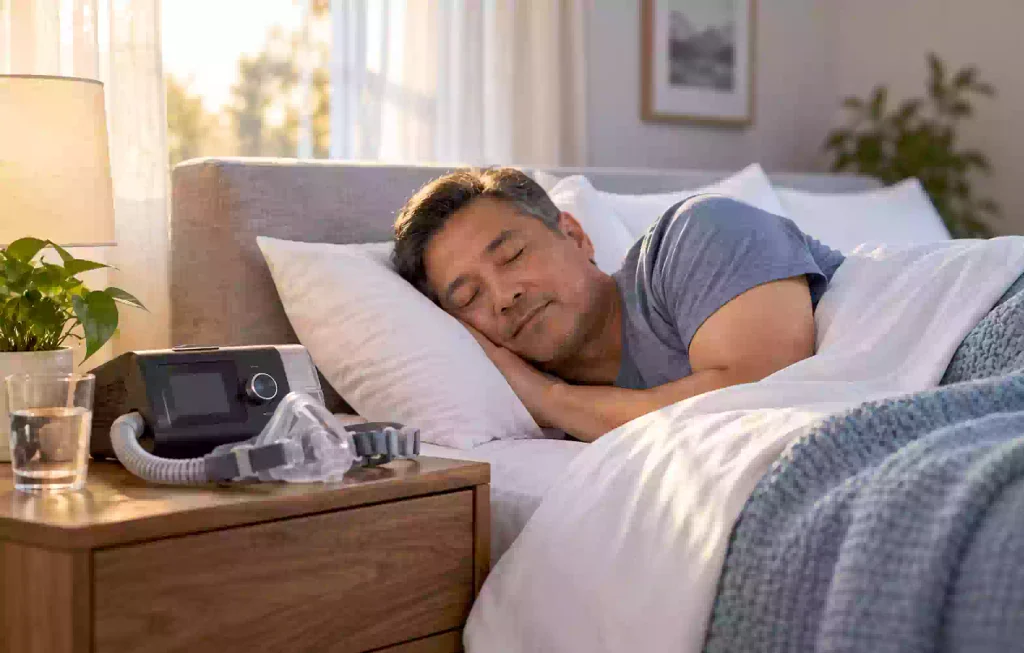
OSA is one of the most common and most underdiagnosed conditions in the world, affecting nearly 1 billion people. For decades, the standard treatment has been CPAP, a machine that blows air into your airway to keep it open while you sleep.
CPAP works, but many people find it uncomfortable, noisy, and hard to use every night. In fact, fewer than half of patients use it as often as recommended.
That’s why the December 2024 news mattered so much. The FDA approved Zepbound (tirzepatide) for moderate-to-severe obstructive sleep apnea in adults with obesity. It’s the first medication ever approved specifically for sleep apnea, and the results are remarkable.
Key Takeaways on Tirzepatide and Sleep Apnea
- First of its kind: The FDA approved Zepbound on December 20, 2024, as the first medication for moderate-to-severe OSA in adults with obesity.
- Proven results: In the SURMOUNT-OSA trials, tirzepatide reduced sleep apnea events by 25 to 29 per hour, compared with about 5 per hour on placebo.
- Extra benefits: Participants also saw lower blood pressure and less inflammation.
- Keep your CPAP for now: Only a follow-up sleep study can show whether you can safely use CPAP less or stop it.
What Is Tirzepatide?
Tirzepatide is a once-weekly injection that activates two gut hormone receptors, GLP-1 and GIP. Together, these hormones reduce appetite, help you feel full longer, and improve how your body handles blood sugar.
Eli Lilly makes tirzepatide under two brand names. Zepbound treats chronic weight management and sleep apnea, while Mounjaro treats type 2 diabetes.
What Causes Obstructive Sleep Apnea?
Obstructive sleep apnea occurs when the muscles in the back of your throat relax during sleep. As a result, your airway narrows or closes completely.
The blockage stops airflow and drops your oxygen levels. Your brain then briefly wakes you up to reopen the airway. This cycle can repeat dozens or even hundreds of times per night, often without you knowing it.
Excess weight is the number one risk factor. It affects your airway in three ways:
- Neck and throat fat: Fat deposits around the neck and throat narrow the airway
- Belly fat: Visceral fat in the abdomen pushes up on the diaphragm and reduces lung volume.
- Inflammation: Excess fat tissue releases inflammatory molecules that can make the airway swell.
How Is Sleep Apnea Severity Measured?
A sleep study measures your apnea-hypopnea index (AHI), which is the number of times per hour your breathing stops or becomes shallow. You can do the study overnight in a sleep lab (polysomnography) or with a home sleep apnea test.
| AHI (events per hour) | Sleep Apnea Severity |
| Under 5 | Normal |
| 5 to 14 | Mild |
| 15 to 29 | Moderate |
| 30 or more | Severe |
Zepbound’s sleep apnea approval covers moderate-to-severe OSA, which means an AHI of 15 or higher. For comparison, people in the SURMOUNT-OSA trials started with an average AHI of about 50, well into the severe range.
How Well Does Tirzepatide Work for Sleep Apnea?
Tirzepatide works very well for weight-related sleep apnea. In two 52-week trials, it lowered the AHI by 25 to 29 events per hour, about a 51% to 59% drop. Meanwhile, up to half of participants reached remission or mild sleep apnea without daytime sleepiness, compared with roughly 15% on placebo.
What Was the SURMOUNT-OSA Trial?
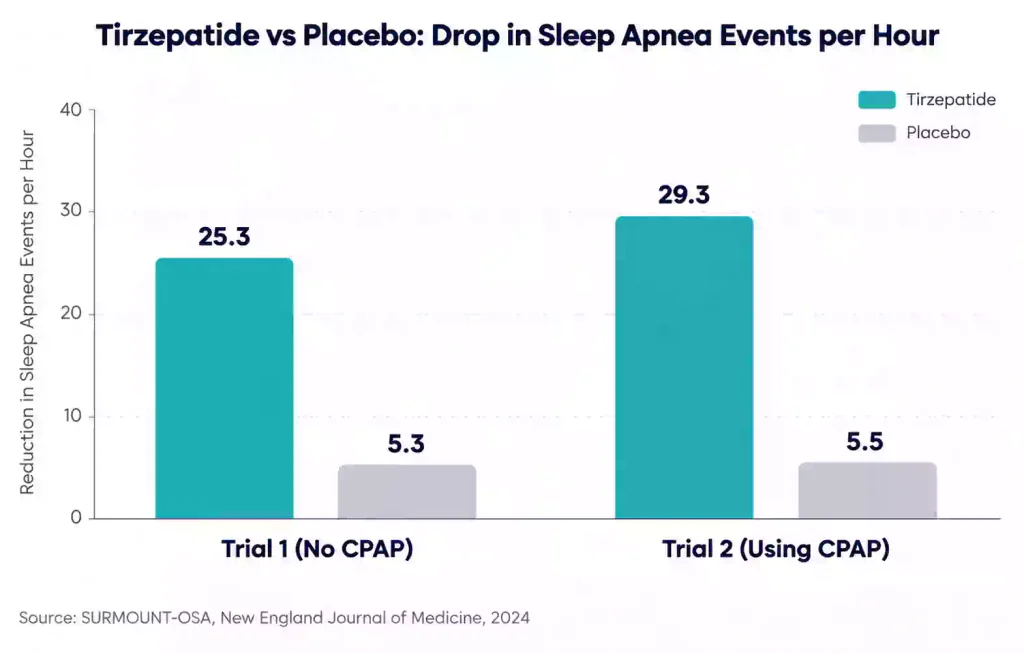
The FDA based its approval on two phase 3 trials called SURMOUNT-OSA. Trial 1 enrolled people who weren’t using CPAP, and Trial 2 enrolled people who were.
Together, the trials followed 469 adults with obesity and moderate-to-severe OSA for one year. Researchers then published the results in the New England Journal of Medicine.
Sleep Apnea Results
- Sleep apnea events dropped dramatically. Tirzepatide reduced the AHI by 25.3 events per hour in Trial 1 and 29.3 in Trial 2. By contrast, placebo reduced it by only 5.3 and 5.5.
- Up to 50% reached remission or mild sleep apnea. In Trial 2, 50.2% of people on tirzepatide reached an AHI below 5, or 5 to 14 without daytime sleepiness. At that level, CPAP may no longer be recommended. Only 14.3% on placebo got there, and Trial 1 showed a similar pattern (42.2% vs 15.9%).
- 61% to 72% cut their events at least in half. This clinically meaningful threshold typically translates to significant symptom improvement. On placebo, only 19% to 23% did.
- Nightly oxygen drops improved. Tirzepatide also lowered hypoxic burden, which measures how deep and how long oxygen levels fall during sleep.
Weight, Blood Pressure, and Inflammation Results
- Patients lost 17.7% to 19.6% of their body weight. This level of weight loss directly reduces the physical blockage behind sleep apnea.
- Blood pressure improved. Systolic blood pressure fell by 9.5 mm Hg in Trial 1 and 7.6 mm Hg in Trial 2. That matters because about three in four participants had high blood pressure at the start. See how GLP-1 medications lower blood pressure.
- Inflammation decreased. High-sensitivity C-reactive protein (hsCRP), the body’s main marker of inflammation, dropped significantly in both trials.
- Sleep quality improved. Participants also reported fewer sleep disturbances and felt less impaired by poor sleep during the day.
SURMOUNT-OSA Results at a Glance
| Result at 52 Weeks | Trial 1 (No CPAP) | Trial 2 (Using CPAP) |
| AHI reduction with tirzepatide | 25.3 events per hour | 29.3 events per hour |
| AHI reduction with placebo | 5.3 events per hour | 5.5 events per hour |
| At least 50% fewer events (tirzepatide vs placebo) | 61.2% vs 19.0% | 72.4% vs 23.3% |
| Remission or mild OSA without sleepiness (tirzepatide vs placebo) | 42.2% vs 15.9% | 50.2% vs 14.3% |
| Body weight lost with tirzepatide | 17.7% | 19.6% |
| Systolic blood pressure change with tirzepatide | 9.5 mm Hg lower | 7.6 mm Hg lower |
Source: Malhotra et al., New England Journal of Medicine, 2024. Researchers measured blood pressure at week 48.
What Are the Side Effects of Tirzepatide for Sleep Apnea?
In the trials, the most common side effects were diarrhea, nausea, vomiting, and constipation. Most were mild to moderate, and they usually showed up while the dose was still increasing.
Do Ozempic, Wegovy, and Other GLP-1 Medications Help Sleep Apnea?
Other GLP-1 medications can help sleep apnea, but the effect varies. Semaglutide (Ozempic and Wegovy) likely improves OSA through weight loss, yet it isn’t FDA-approved for sleep apnea. So far, tirzepatide is the only medication in this class with that approval and dedicated phase 3 sleep apnea data.
Meta-analyses that pooled randomized trials confirm a class-wide benefit, with average AHI reductions of roughly 9.5 to 15 events per hour. However, not every medication works equally well. In one meta-analysis, tirzepatide lowered AHI by about 22 events per hour, while liraglutide lowered it by about 5.
Already on semaglutide? Ask your provider whether switching from semaglutide to tirzepatide makes sense for your sleep.
How Does Tirzepatide Improve Sleep Apnea?
Weight loss is the main driver. Losing weight shrinks the fat deposits around your neck and throat that physically block the airway.
Guidelines recommend losing 7% to 11% of body weight for people with sleep apnea, and more weight loss can lower AHI even further. For comparison, GLP-1/GIP medications produced roughly 15% to 21% weight loss in major obesity trials.
But weight loss isn’t the only mechanism:
- Less airway inflammation. Excess weight inflames the throat and upper airway tissues. GLP-1/GIP medications lower systemic inflammation, which may calm airway swelling and improve airflow. Learn why lowering inflammation matters.
- Better metabolic health. Sleep apnea is closely linked to insulin resistance, high blood pressure, and type 2 diabetes. Because these medications improve all three, they target the metabolic problems that both fuel sleep apnea and worsen because of it.
- Less fluid retention. Early evidence suggests GLP-1/GIP medications may reduce fluid retention. As a result, less fluid may shift toward your neck and throat when you lie down, a process called rostral fluid shift that worsens sleep apnea.
Can Tirzepatide Replace Your CPAP Machine?
Not automatically. Tirzepatide can reduce sleep apnea severity enough that some people lower their CPAP pressure, use CPAP less, or stop it entirely. However, that decision should only follow a repeat sleep study and your provider’s approval, because many people still need CPAP after a year of treatment.
Even in the trials, roughly half of participants hadn’t reached remission or mild sleep apnea after 52 weeks. For this reason, the American Academy of Sleep Medicine advises using Zepbound as part of full sleep apnea care rather than as a CPAP replacement.
Still, for patients who can’t tolerate CPAP, and there are many, this is a genuine breakthrough. For the first time, an effective medication targets the root cause (excess weight and inflammation) instead of just splinting the airway open.
We’ve seen this in our own practice. One patient shared in a review that after a few weeks on tirzepatide, their heavy snoring and gasping for air had stopped. Of course, individual results vary, and only a sleep study can confirm how much your sleep apnea has improved.
Who Is Tirzepatide for Sleep Apnea Right For?
Zepbound’s sleep apnea approval covers adults with obesity and moderate-to-severe obstructive sleep apnea (an AHI of 15 or higher). You’ll use it alongside a reduced-calorie diet and more physical activity, which is where nutrition counseling can help.
Before you start, keep these points in mind:
- Diabetes: The SURMOUNT-OSA trials didn’t include people with type 1 or type 2 diabetes, so your provider will weigh your options differently if you have either.
- Brand vs compounded: The FDA approval for sleep apnea applies to brand-name Zepbound. Compounded tirzepatide doesn’t carry that approval.
- Long-term plan: Many people regain weight after stopping, which can bring symptoms back. Ask about a sustainable tirzepatide maintenance dose before you begin.
Frequently Asked Questions
Should You Ask Your Provider About Tirzepatide?
Sleep apnea isn’t just about snoring. It’s a serious medical condition that raises your risk of heart attack, stroke, high blood pressure, diabetes, depression, and car accidents.
For decades, CPAP was the go-to treatment. Now, tirzepatide for sleep apnea offers a powerful complement, or in some cases an alternative, because it targets the obesity and inflammation behind the condition.
If you have sleep apnea and carry extra weight, talk to your provider about whether a GLP-1/GIP medication could help you breathe easier, sleep better, and live healthier.

At Everest eClinic, Geeta Sharma, DNP, NP-C, offers medical weight loss treatment by telehealth across Connecticut and Texas. Have your latest sleep study results handy, then book a free 15-minute phone consultation, or call or text 203-689-0558.
Contact Everest eClinic to speak with a provider about your options.
Sincerely,
Geeta Sharma,
DNP Endocrinology Nurse Practitioner
Everest Diabetes & Weight Loss
Connecticut: 203-689-0558 Office Phone or Text
Texas: Call: 512-541-2126

This article is for informational purposes and does not replace individualized medical advice. Talk to your provider before starting or stopping any medication.
Sources
- Malhotra A, et al. Tirzepatide for the Treatment of Obstructive Sleep Apnea and Obesity. New England Journal of Medicine, 2024.
- U.S. Food and Drug Administration. FDA Approves First Medication for Obstructive Sleep Apnea. December 20, 2024.
- American Academy of Sleep Medicine. Zepbound for Obstructive Sleep Apnea: Provider Fact Sheet. 2026.